- Home
- Departments
- Public Works
- Fats, Oils, & Grease (FOG) Program
Fats, Oils, & Grease (FOG) Program
FOG Program
Commercial FOG
Commercial businesses that are likely to discharge fats, oil, and grease (FOG) into the sewer system are governed by the requirements of the City of Greenfield’s Municipal Code, specifically under Municipal Code 13.28.285 Fats, Oils, & Grease Control Program.
Information regarding the City’s FOG program can be found in the publication “Fats, Oils, and Grease Program for Food Service Establishments.”
Residential FOG Program
What is FOG? Fats, Oils, & Grease
FOG is an acronym for Fats, Oils, and Grease which is commonly found in wastewater. Cooking oils, condiments such as salad dressings and sandwich spreads, meat juices, lard, shortening, dairy products, sauces, and butter/margarine, are just some household kitchen items that produce FOG.
Why is FOG a problem?
FOG can clog pipes in your home and in the public sewer pipes. How does this happen? Well, too often, grease is washed into the plumbing system, usually through the kitchen sink. Grease sticks to the insides of the sewer pipes (both on your property and in the streets) and accumulates over time, which greatly restricts or completely blocks the flow of sewage causing sewer backups known as sanitary sewer overflows (SSO’s). SSO’s can create serious public health hazards and damage property, which is expensive and unpleasant to clean up.
What can you do?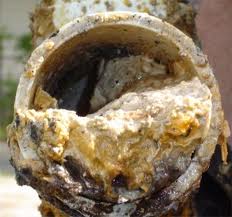
The most important of these recommendations is to never put FOG down the drain. Even the smallest amount of fats, oils, and grease will solidify and stick to the sewer. You might think that it can’t do any harm to allow a small amount of grease to go down the drain as you’re cleaning up, especially if you rinse with very hot water. But hot water cools quickly and so does hot grease. When it cools, it solidifies. Imagine that tiny amount of grease that slips down your drain (multiplied several thousand times by all the sanitary sewer customers) solidifying as it cools, sticking to the insides of sewer pipes, trapping food particles, and all kinds of other debris in the wastewater. Over time, this FOG can grow, until the flow of water is obstructed and sewage begins to back up.
Clogged Sewer Line Caused by FOG
Even with the most diligent of efforts, some FOG will find their way into the drain, but following the guidelines listed below will have a tremendous impact on our battle to prevent FOG-related SSO’s.
- Alternatively, you can take your FOG to Salinas Valley Recycles (Salinas Valley Solid Waste Authority SVSWA) at svswa.org.
- Wipe FOG from pots, pans, and dishware with a paper towel before washing.
- Home garbage disposals do not keep grease out of your sewer system. In fact, garbage disposals help contribute to the problem of blocked sanitary sewer pipes. Food particles stick to the grease that clings to pipe walls and speeds the blockage of pipes. Garbage disposals use large amounts of water and electricity. Reduce or eliminate usage to lower utility bills.
- Commercial additives, including detergents, which claim to dissolve grease, only pass grease down the line and cause problems in other areas. This does not solve the problem!
What's in it for you?
Your efforts will help to…
- Prevent disruptions to your sewer service.
- Prevent costly and inconvenient cleanups inside your home.
- Prevent damage to the environment. The EPA (Environmental Protection Agency) has determined that SSO’s are the number one cause of pollution in our national waterways.
- Help keep costs down. If the City is responsible for a clean-up, additional manpower and monies are spent on an event that could have been avoided. Associated costs may include containment, removal, and disposal of contaminated materials, emergency pipeline cleaning, disinfectants, sampling and testing, record keeping and documentation, public notification, EPA enforcement actions, property damages and exposure to untreated wastewater (pathogens and viruses.) These costs will eventually trickle down into customers’ sewer bills.
Help protect your environment!
This is very important for you and our community. Keeping grease out of the drain benefits the homeowner, the City, and the environment by reducing sanitary sewer overflows (SSO’s), and keeping the maintenance and treatment costs down, which helps keep your sewer bill as low as possible.